As a professional manufacturer of natural plant extracts, ANIHERB supplies high-purity luteolin raw material converted from rutin and peanut shell raw materials for global cosmetic, health food and pharmaceutical manufacturers. This article systematically sorts out the latest research progress of luteolin from peanut shells and various plants, helping ingredient purchasers and formulators fully understand its source, biological activity, synthetic technology and industrial application prospects.
Luteolin (CAS: 491-70-3, chemical name: 3′,4′,5,7-Tetrahydroxyflavone) is a core natural flavonoid compound, originally isolated from the stems and leaves of Reseda luteola L. It widely exists in hundreds of plants in the form of flavonoid glycosides and can be extracted and purified from more than 300 plant species.
Common crops, fruits and vegetables containing luteolin include peanuts, rapeseed, olive, buckwheat, cocoa, pepper, celery, carrot, cucumber, lettuce and pomegranate. In addition, multiple medicinal and aromatic herbs are rich in luteolin: honeysuckle, dianthus, perilla, scutellaria, peppermint, thyme, oregano, rosemary, wedelia chinensis, artichoke, caper, dracocephalum, ajuga reptans and impatiens balsamina all contain detectable luteolin ingredients.
Although luteolin is distributed widely in nature, its absolute content in fresh plant tissue is generally low, and obvious content differences exist between different plant varieties and different tissue parts of the same plant. Relevant studies have verified that tamarind shells contain luteolin, while no luteolin can be detected in tamarind pulp. For peanut plants, luteolin barely accumulates in seeds, stems and leaves, but peanut husks carry relatively high luteolin content, with a content range of 0.02% ~ 0.475%.
Moreover, luteolin concentration varies significantly among peanut cultivars planted in different regions. Middle-type peanut varieties hold the highest luteolin content up to 0.475%, higher than pearl bean, multi-grain and wild peanut strains. Peanut shell, an agricultural waste by-product of peanut processing, has become one of the most cost-effective sustainable raw material sources for industrial luteolin mass production. ANIHERB adopts green enzymatic hydrolysis purification technology to extract luteolin from discarded peanut shells, effectively reducing raw material costs while lowering solvent residue, and realizes stable batch purity control of finished luteolin powder.
Luteolin ranks among the most researched natural flavonoid monomers globally. It delivers preventive effects against tumors, cardiovascular disorders and chronic metabolic diseases, accompanied by outstanding antioxidant, antibacterial, anti-inflammatory and anti-tumor biological activities, with huge development value in pharmaceutical, cosmetic and nutraceutical industries. Luteolin owns dual application value for human healthcare and plant disease resistance, making it a hot research direction in natural medicine development and plant pathology research worldwide. Deep development and utilization of luteolin and other flavonoids from peanut shells can greatly improve the comprehensive economic utilization value of peanut agricultural by-products. Our high purity luteolin bulk powder is widely adopted by global manufacturers for soothing skincare, anti-aging supplements and topical anti-inflammatory preparations:
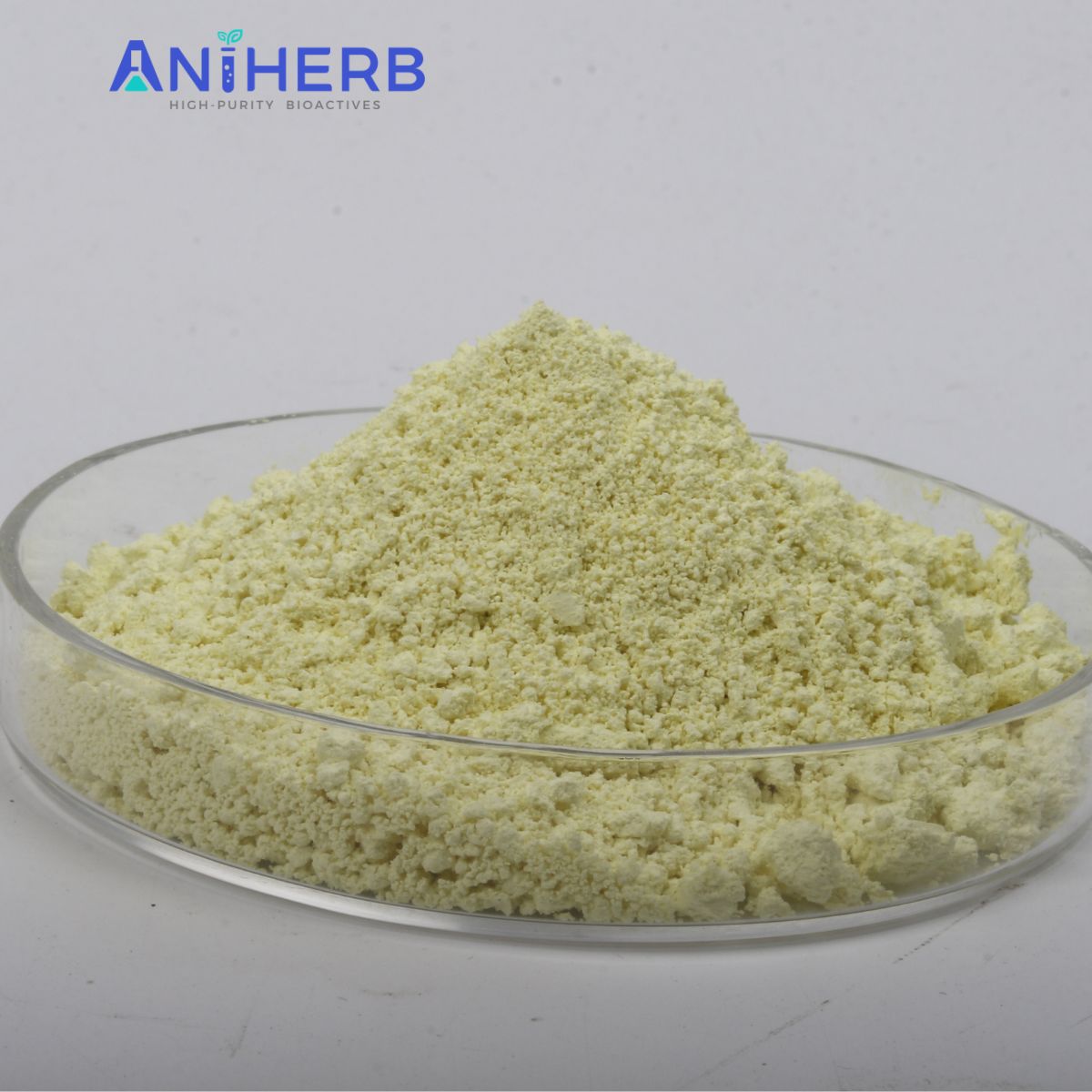
Luteolin 98% Powder | Natural Plant Extract Supplier ANIHERB
1. Core Bioactivities of Luteolin
Luteolin is a multi-functional natural flavonoid with multiple verified bioactive properties beneficial to human physical health. Its core physiological functions are summarized as follows: antioxidant, antibacterial, anti-inflammatory, anti-tumor and anti-radiation activity, plus auxiliary effects on blood pressure regulation, cough relief and expectoration.
1.1 Antioxidant Capacity
Excess free radicals in human bodies are closely associated with cell aging, malignant tumors, atherosclerosis, thrombosis and multiple chronic disorders. Luteolin and homologous flavonoids eliminate free radicals via phenolic hydroxyl chemical reactions, generating stable semi-quinone free radicals to terminate oxidative chain reactions.
Meanwhile, luteolin inhibits the overexpression of lactate dehydrogenase and malondialdehyde in cardiomyocytes, and elevates the activity of antioxidant enzymes including SOD and CAT, forming dual anti-oxidative protection for human cells. For cosmetic formulations, luteolin can resist UV-induced oxidative skin damage, delay photoaging and maintain youthful skin condition.
1.2 Anti-Tumor Activity
Luteolin carries reliable anti-tumor and anti-cancer effects through multiple regulatory pathways. It can trigger programmed apoptosis of various malignant tumor cells without damaging normal peripheral blood mononuclear cells. In addition, luteolin suppresses vascular endothelial growth factor expression to inhibit tumor angiogenesis, limiting tumor proliferation and distant metastasis.
It also works as a radiosensitizer and chemosensitizer: combined with chemotherapy drugs, luteolin improves tumor cell sensitivity to pharmaceutical treatment and enhances the apoptosis-inducing efficacy of anti-cancer agents, which is widely studied in oncology pharmaceutical research.
1.3 Anti-Inflammatory Function
Numerous clinical and laboratory studies confirm luteolin’s potent anti-inflammatory performance. COX, LOX and iNOS are key pro-inflammatory enzymes that trigger skin redness, swelling and internal chronic inflammation; luteolin can selectively inhibit the activity of COX-2, LOX and iNOS to relieve inflammatory reactions. This property makes luteolin the core raw material for sensitive skin repair, anti-acne and soothing cosmetic products.
1.4 Antibacterial Activity
Luteolin and flavonoid extracts can effectively block invasion of exogenous harmful microorganisms. Interestingly, luteolin will promote its own synthesis under symbiosis conditions of rhizobia and leguminous plants, assisting plants to build natural disease-resistant barriers against pathogenic bacteria.
1.5 Additional Biological Activities
Luteolin provides obvious anti-radiation protection, reducing ROS damage caused by radiation exposure in both plants and human cells. It assists in lowering blood pressure and serum cholesterol to prevent cardiovascular lesions, and stabilizes blood glucose concentration to reduce diabetes risk.
Besides, luteolin suppresses histamine secretion through multiple metabolic pathways to exert anti-allergic effects, which fits the formulation demands of sensitive skincare and anti-itch topical products.
2. Biosynthetic Pathways & Industrial Preparation Methods of Luteolin
2.1 Biosynthetic Pathway of Luteolin and Flavonoids
Luteolin and all flavonoid compounds are generated through the shikimic acid pathway and polyketide pathway. The basic flavone carbon skeleton is synthesized by the condensation reaction of three molecules of malonyl-CoA and one molecule of coumaroyl-CoA, which lays the theoretical foundation for microbial biosynthesis of luteolin.
2.3 Three Main Industrial Synthesis Routes of Luteolin
(1) Full Chemical Total Synthesis
Total synthetic routes based on phloroglucinol have been reported in existing literature, but the overall product recovery rate is only 3% ~ 4%. The complicated reaction steps, high chemical reagent cost and heavy waste discharge restrict large-scale industrial production, so this method is rarely adopted by formal extract manufacturers.
(2) Semi-Synthetic Method (Mainstream Industrial Route Adopted by ANIHERB)
Rutin is used as the primary raw material for semi-synthesis: dissolve rutin under alkaline environment, add sodium dithionite, then heat and reflux the mixture at 100°C for 12 hours for hydrolysis, to obtain luteolin powder with purity over 95%, with a conventional yield of about 56%.
By applying microwave-assisted synthesis technology, the reaction efficiency can be significantly improved, lifting the luteolin yield up to 60%. Our optimized microwave purification process raises the yield to 83.9% and stably delivers finished luteolin with HPLC purity ≥98%.
Compared with direct plant extraction, semi-synthesis from rutin achieves higher purity, more stable batch difference and lower heavy metal residue, which meets cosmetic, food and pharmaceutical grade standards at the same time.
(3) Microbial Biosynthesis
In terms of raw material cost, recovery process, production cost control and environmental safety, the comprehensive advantages of biosynthetic luteolin are far inferior to natural extracted and rutin semi-synthetic luteolin, so it has not been widely applied in industrial mass production at present.
3. Industry Outlook for Luteolin Application
Luteolin, a multifunctional flavonoid monomer with anti-cancer, antioxidant, antibacterial, anti-allergy and immune-regulating properties, naturally accumulates in peanuts, carrots, pomegranates and hundreds of plant varieties.
This natural active ingredient not only endows raw plants with healthcare value for human beings, but also constructs natural disease-resistant barriers for plants against pathogenic microorganism infection. At present, luteolin and homologous flavonoids have become core research hotspots across phytochemistry, food processing, pharmaceutical manufacturing, nutraceutical development and crop disease resistance improvement fields.
Supplementary Sourcing Guide for Global Buyers
For cosmetic factories, supplement brands and pharmaceutical enterprises searching for reliable luteolin suppliers, ANIHERB supports flexible order specifications: small trial samples for R&D testing, 1kg~25kg bulk industrial packaging, customized purity standards (90%, 95%, 98% HPLC), and complete export documents including COA, MSDS, third-party heavy metal & microbial test reports.
Related Natural Flavonoid Raw Materials You May Need
If you develop skincare or antioxidant supplement formulations with luteolin, the following flavonoid extracts from our product line are highly matched for compound formula development:
- Esculin Powder: Mainly used for sensitive skin barrier repair and anti-inflammatory skincare formulas
- Isoquercitrin Extract: High-efficiency antioxidant raw material for anti-aging essence and oral antioxidant supplements


Get Social